
Save money now: 27 ways to lower your utility bills

In the current economic climate, its been a bit rough for those that want to go green on a budget. Not everyone can...
Read the rest of this article
In the current economic climate, its been a bit rough for those that want to go green on a budget. Not everyone can...
Read the rest of this article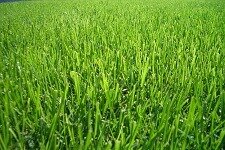 The snow and ice are finally gone, the birds are singing, and trees are beginning to leaf out. It’s that season again – lawn care season. Consumers spent $35 billion in 2007 for lawn and garden products. So we get better lawns from it right? Not really.
In fact, most lawn care results in a vicious cycle. Adding fertilizer in the spring jumpstarts the lawn growth. But that helps the weeds as well as the grass. Adding herbicide kills weeds – which also kills beneficial broad leaf plants like clover, which fixes nitrogen. The remaining monoculture of grass has no defense to pests, so pesticides need to be added. Come the dry summer, and the lawn needs watered daily so it doesn’t wither and dry-out. You water and you fertilize and you add more chemicals and – if everything goes right and the lawn grows nice and lush – you have to mow at least once or twice a week.
Maintaining such a lawn take a lot of resources. According to a team of ecologists at The University of Texas at Austin's Lady Bird Johnson Wildflower Center,
U.S. lawn maintenance annually consumes about 800 million gallons of gasoline, $5.2 billion of fossil-fuel derived fertilizers, and $700 million in pesticides. Up to two thirds of the drinking water consumed in municipalities goes to watering lawns.
So the team set out “to develop a more ecologically stable, natural alternative for lawns.” They studied multiple plots of grasses including traditionally used turfgrass (such as bermudagrass) and a mix of native grasses for two years.
The results:
A lawn of regionally native grasses would take less resources to maintain while providing as lush a carpet as a common turfgrass...“We created a lawn that needs less mowing and keeps weeds out better than a common American lawn option," said Dr. Mark Simmons, director of the center's Ecosystem Design Group, noting that this new approach could have a huge impact on pocketbooks and the environment.
Here is another example of how being green can save you green. Using native grasses for the lawn makes it more lush, needs less watering, needs fewer chemicals, needs less mowing, and is better for the environment. So what’s the downside? Ask for native grasses from your local lawn and garden suppliers. If they don’t have any, you can also check out Ernst Conservation Seeds.

Comments
Surprising that very few people know that. But it's a great information! From now on I will find alternative solutions. Thanks!