
Save money now: 27 ways to lower your utility bills

In the current economic climate, its been a bit rough for those that want to go green on a budget. Not everyone can...
Read the rest of this article
In the current economic climate, its been a bit rough for those that want to go green on a budget. Not everyone can...
Read the rest of this article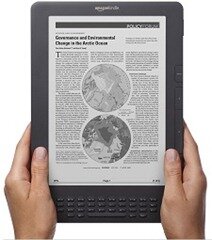 Using an e-reader would seem to be a natural fit for academic reading and university study. Rather than hauling massive tomes in a bursting backpack, all the texts could be contained by something like a Kindle DX, which is the size of notebook and weighs just over a pound. But a recent study on how students do academic reading indicates that e-readers still have a long way to go before they are college ready.
To gage the utility of e-books at the university level, researchers at the University of Washington conducted a study using Kindle DX’s with 39 first-year graduate students in the UW’s Department of Computer Science and Engineering. The goal of the study was to look at the strategies students employ while reading and studying and how the Kindle aided or hindered these strategies.
Although students in the Department of Computer Science and Engineering would most likely be tech-savvy, over 60% quit using the Kindle DX within seven months. The biggest complaints were the lack of ability to mark up the text and take notes, and the difficulty to look up references (these features have been since improved). Some students who continued with the e-reader used it in conjunction with a computer to look up references, while others kept sheets of paper tucked in the Kindle DX for note taking.
Another drawback with the Kindle DX was that it didn’t support switching between reading styles, such as skimming and detailed reading. Reading technical texts is often easier by first skimming a section to get an overall feel of the material, and then going back for more in-depth reading. Additionally, “cognitive mapping” – the technique of using physical cues to retain material or find information – could not be done with the current e-reader.
No doubt, with such research, the capabilities of e-readers and e-reader software for academia will continue to grow. Different disciplines – such as engineering or liberal studies – have different reading styles, which a successful e-reader will need to support. According the study’s first author Alex Thayer:
There is no e-reader that supports what we found these students doing. It remains to be seen how to design one. It’s a great space to get into, there’s a lot of opportunity.
Until these improvements occur, however, graduate students will still be consigned to a bursting backpack of books.
You can check out the latest for yourself at Amazon.com.

Comments
WONDERFUL Post.thanks for share..more wait .. …
Motorola HS-500