
Save money now: 27 ways to lower your utility bills

In the current economic climate, its been a bit rough for those that want to go green on a budget. Not everyone can...
Read the rest of this article
In the current economic climate, its been a bit rough for those that want to go green on a budget. Not everyone can...
Read the rest of this article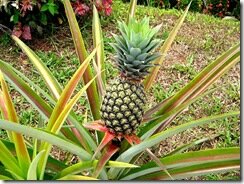 Researchers from Brazil announced successful development of a new form of plant fiber-based plastic as stiff as Kevlar and supposedly stronger, lighter yet more eco-friendly than plastics currently in use. Can we expect fiber-based dashboards in future Nissan leafs, GM Volts etc.? Are these fiber-based plastics truly eco-friendly?
When finely grinding up cellulose tiny fiber particles are produced. Mixing these tiny particles, which are so small that 50,000 of them could fit into the width of a human hair, into the plastics, results in stronger and more durable plastics. Alcides Leao, the team leader responsible for the development of fiber-based plastics sais, that these nano-cellulose fibers can be almost as strong as Kevlar, and in addition, they are a renewable source.
To produce these nano-cellulose fibers, leaves and stems of fruits such as bananas, pineapples or curaua are placed into a pressure cooker, where certain chemicals are added to the mix. After several heat cycles, a fine powder is produced. In more practical numbers: one pound of nano cellulose could be enough to produce 100 pounds of fiber-based plastics.
So for a 1% “eco-friendliness of plastics” increase, we need to gather, transport, cook, and mix cellulose with chemicals in order to produce 1% of nano-cellulose fibers. We than add these nano-fibers to remaining 99% of plastics, which we are producing anyway.
GREEN VERDICT: In order to truly grade the “greenness” of this technology, we would have to compare effective inputs of energy, materials and eco-impact of “regular” plastic vs. the new fiber-based plastics. For now though, it doesn’t look as if your GM Volt, Nissan Leaf or Toyota Prius might be “pineappleized” with fiber-based plastic dashboards any time soon.
(photo Source: 1.bp.blogspot)

Comments
Can I simply say what a aid to find someone who truly is aware of what theyre talking about on the internet. You undoubtedly know the right way to bring an issue to gentle and make it important. Extra people have to learn this and perceive this facet of the story. I cant imagine youre no more well-liked since you positively have the gift.
Motorola Bluetooth Headphones