
Save money now: 27 ways to lower your utility bills
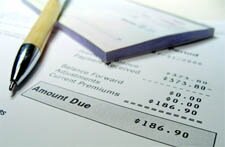
In the current economic climate, its been a bit rough for those that want to go green on a budget. Not everyone can...
Read the rest of this articleIn the current economic climate, its been a bit rough for those that want to go green on a budget. Not everyone can...
Read the rest of this article
President Obama's insistence, and for that matter persistence, to stick to his plan of reigniting the job market and stimulating the economy can certainly be admired by those finally back at work. Increased governmental intervention in unemployment, has perhaps, prevented an even more deflated job market than the 9.7% recently reported.
Although stabilizing, the unemployment percentage is still daunting and one question remains to be seen: Is President Obama's next step in his unemployment and stimulus plan finally going to turn the tides on the recession and unemployment?
As President Obama openly admits, the 9.7% unemployment is unacceptable. In Virginia on Friday he said, "Far too many Americans remain out of work, far too many families are still struggling in these difficult economic times."
It is the stance President Obama has taken from the start of his campaign: the current economy is down and needs to be revived.
To do so, President Obama has poured hundreds of billions into the economy to stimulate spending and get people back to work.
For the housing market, Obama created an $8,000 tax write-off for new home buyers, and for the automotive crisis, he started the Cash for Clunkers program. Both successful tax write-off programs encouraged spending in sectors heavily effected by the recession, but both were purely reactionary.
President Obama's focus on renewable energy such as solar power, wind turbines, and biofuels, however, is much more preemptive. With the similar goal of creating jobs and generate spending, President Obama is hoping another attempt at write-offs and rebates for energy efficiency will pull the nation that much closer to ending the recession.
President Obama said, "We need to invest in the jobs of the future and in the industries of the future, because the country that leads in clean energy and energy efficiency today, I'm absolutely convinced, is going to lead the global economy tomorrow."
The latest plan is called Homestar, and it's intent is to get consumers to buy energy efficient products by offering $1,500 for home upgrades and $3,000 for complete home renovations.
The Homestar plan offers a three-pronged opportunity. First, offer consumers a tax rebate, or money savings, to transform an otherwise energy sucking house into a energy efficient gem. Then, because the money is returning in the form of a write-off or rebate check from the government, businesses capitalize on the incentives of selling high volumes of normally priced goods (no need for mark downs). Finally, because businesses are selling the products, other businesses need to supply the products, and in order to do so, jobs must be created in those markets. With employed consumers comes money changing hands which ultimately means a stimulated economy. Then it all goes full circle again.
Sure, it is a simplified version of the government's intentions, but the logic behind it makes sense for consumers not worried about the national debt.
The overall effect of the Recovery and Reinvestment Act is still coming in, but already more than 594,754 jobs have been created and $99.1 billion of tax relief has been handed out.
Just like the other rebate and tax write-off programs, it is a win win for consumers and businesses. Jobs and rebates for all.
The only issue is that the government continues to wants to micromanage the economy with programs like this. At some point the government needs to let go so that it is not doing all the spending.
The Homestar program needs to usher the economy into the next phase of consumers buying homes, cars, and energy efficient products without the incentives from the government. Industries need to get back on their feet and back to capitalism.
Why Tainted Green? Literally, green is only a color. But in typical human fashion we've pumped a cacophony of additional meanings and symbolism into the word. Green has become a marketing tool used by companies with impunity to wrap their products in a balmy haze of "ethical" and "conscientious" approval.
That's where Tainted Green steps in. We are seekers of truth, and we support the fundamental drivers behind the green movement. Ideas like permaculture, renewable energy, and recycling make sense, but companies that express support for green without a wholesome process behind it have tainted the meaning of green. And so, our focus is to create green content that pushes the ideology forward while pointing out which parts look like this year's marketing baggage. Welcome to Tainted Green, where we focus on unearthing the truth about green.
